Recommended

A to Z of Taekwondo

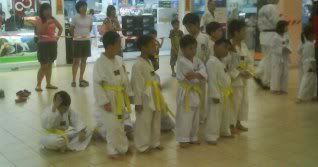
A.... is for Attentive. Taekwondo kids are very attentive. For them to learn complicated taekwondo kicks and moves. They must concentrate hard. By being attentive and focus, their attention span gets longer. And longer.

Taekwondo Kid : Little Masters

Children who are in tune with their bodies and who are comfortable with their physicality are generally more confident and self-assured than other children. The discipline and respect inherent in Taekwondo prevents this confidence from developing into unchecked arrogance and aggression.

Taekwondo Kicks - Is Relaxation The Key To Your Kicking Success?

Have you ever watched top taekwondo players kick? I always notice how relaxed they are. Their shoulders are down and back. Their arms are loose. And their legs seem to work totally independently of their bodies.

A Guide To Taekwondo Belt Colors

The belts and their colors that are used with Taekwondo aren't just a random assortment of colors that are used to separate the ranks in the martial art. In Taekwondo, each belt color has a meaning that lets fighters known about their advancement

Sparring Drills Are A Vital Part Of The Learning Experience In Taekwondo

My favorite sparring drills were working on powering my kicks, and working on my speed. These techniques are vital in Taekwondo. You must have power and speed to succeed. My instructor had also given me a few combinations to practice regularly with my sparring partner and alone.

Showing posts with label Taekwondo Kid. Show all posts

What you need to know before taking Taekwondo classes.

Taekwondo has become VERY popular over the last decade or so. It is the martial art that most kids go into and it is also an official Olympic sport! Those two reasons are enough to make it worth your while to want to train in it!

But is it the right martial art for you?
Or is it just a bunch of hype?

Let's look into the history and see just exactly what taekwondo really is :


Taekwondo (also spelled tae kwon do or taekwon-do) is a martial art originating in Korea. An amalgamation of Chinese, Japanese, and traditional Korean fighting styles, taekwondo has become the world's most commonly practiced martial art, and is the national sport of Korea as well as an Olympic sporting event.

In Korean, derived from hanja, tae means "to strike or smash with the foot"; kwon means "to strike or smash with the hand"; and do means "art of" or "way of". Hence, taekwondo is loosely translated as "the art of hand and foot" or "the way of the foot and the fist". Taekwondo's popularity has resulted in the divergent evolution of the art.
KUNSAN AIR BASE, Republic of Korea -- Senior A...Image via Wikipedia
But more practially speaking, the art really came into its own after the Korean War. The South Korean president at that time ordered that all the martial arts schools be unified and train under the same organization.

Taekwondo also became the countries national sport as well. As other martial arts before it, taekwondo moved its way over to North America and started to catch on and become very popular.

This art is distinct amongst the other traditional arts via the fact that it places a major emphasis on kicking and defending yourself using kicking techniques. Once you learn these techniques correctly, they can become very deadly and are a very effective form of self-defense.

Taekwondo also puts a lot of focus on conditioning and stretching. Because the legs are the largest muscle in the body, you need to make sure they are properly stretched at all times and conditioned.

Because taekwondo is an Olympic sport, most schools focus on sparing and tournament fighting. This is a big part of most schools. The downside of this is, the style of fighting in tournaments is different then the style you would use in a self-defense situation.

Is taekwondo better then karate or the other traditional martial arts?


The focus is different as more emphasis is placed on kicking and tournaments. But any martial art is only as good as the person training in it.

The best way to discover if it is for you is to go and take a few free classes at schools in your area and see for yourself if taekwondo is for you!

Enhanced by Zemanta

Taekwondo is Not Taekwondo Without Its Kicks

You have probably heard this over and over again but you are going to hear it again now - Taekwondo is known for its kicks.

The kicks used in Taekwondo sparring are more striking than in any other martial art. Even though the kicks in poomse are simpler than the ones used in sparring, they can be equally as impressive if executed properly.

Also, a good, solid front kick is more impressive than an impromptu tornado or double roundhouse kick.

What is it that makes a great taekwondo kick?
Taekwondo got its present name from Supakhee i...Image via Wikipedia
1. Balance

Balance may not be seem as obvious as you think. And balance is more than just not ending up on the floor. It is a matter of fluidity, of gracefulness, of naturalness.

With a properly balanced kick, the supporting foot does not wobble, the hands do not flail about, and the athlete does not rush to complete the kick.

Also, the athlete begins and ends the technique in the proper stances without having to correct the stances to accommodate the kick.

Practice moving within your stances. When you feel comfortable doing simple things within your stances, you should try to kick from one stance into another.

2. Proper form

Having proper form is a requirement to having a beautiful kick. Proper form may be defined as the correct positions to which the entire body enters as it performs a kick from start to finish.

It is wise to talk with your instructor or other certified professional martial artist to learn the more articulate details of proper form. They will have the answers to any questions that you may have.

3. Control

The kick in Taekwondo is not supposed to be like that of a whip. It does not have to be so fast that it cannot be seen.

Instead, the kick is to be relished and beheld as the single most attractive feature of Taekwondo.
It is therefore necessary to control the kick. Controlling the kick involves the ability to freeze the kick for a split second at full extension.

This “freeze” is the life of the kick. It is the most memorable and beautiful part of the kick. Controlling the kick is not that easy though. Usually it involves much concentration and many years of practice.

Form is a must to both control and power. If you are not sure that you are doing the kick with proper form yet, keep working on the form part before you begin working on the control part.

Control takes some muscle development and patience, but it is well worth all the effort in the end.

4. Power

Nothing is worse than seeing someone perform a kick with great form, balance, and control, but with no power.

If this is the case, that person is better off as ballet dancer than a taekwondo practitioner. There is no such thing as an excellent kick that has no power.

Take note that proper form is needed to achieve control. And control is the factor that leads to power.

Bear in mind also that if you try to develop power without mastering the proper control first, it may result to permanent damage to your joints. So be very careful.

The process for developing power in a taekwondo kick is very similar to developing control in that same kick.

Note : Taekwondo is not Taekwondo without The Taekwondo Kid :-)
Enhanced by Zemanta

Sparring Drills Are A Vital Part Of The Learning Experience In Taekwondo

Taekwondo sparringImage via WikipediaMy instructor was lecturing me about the importance of our Taekwondo sparring drills. I enjoyed the drills just as much as everyone else in the dojo, but I was not sure where my instructor was going with this particular lecture. Her large, attentive eyes made contact with mine as they always do. She was just a little shorter than me (and I'm short), but she was an experienced black belt with a lot of skill in Taekwondo. I always enjoyed listening to her lectures, especially when she was speaking to only me.

She continued to tell me about her first competition and how she felt a little anxious about how the competition would go. She was nervous because she was not sure about what exactly went on during the competitions, but was soon taught that we can never be sure about what would take place and where it would take place. On the street, in a hallway, in a parking garage - it could be anywhere by anyone - should we get attacked. We should think of our competitions as just that. It is entering the unknown, and we should use that fear to focus our abilities on training with our Taekwondo sparring drills.

I began to understand what she was talking to me about when she mentioned the word technique. In any martial arts, technique is vital to learning the martial art, as well as winning more competitions. "We learn technique through practice, starting slow and eventually being able to memorize those movements with our bodies. True technique comes with practice and routine," she continued. I remembered just starting out in Taekwondo and getting each movement just so in a slow and structured manner. Eventually I was able to do any beginner's move and combination with just the word of my instructor. I saw where she was heading with this particular lecture. I knew I needed to train hard for this first competition of mine, and practicing our sparring drills was a great way to do so.

My instructor had a great way of creating plans for each individual student to follow through for practice for any competition. She gave me mine, and my drill partner - a large man with a black belt proudly tied to his waist. I thought she had mistaken who my drilling partner should be because this man was very experienced and much larger than I. However, drilling with an experienced partner would be good for me. I could learn a lot from him, and sparring with him would be the best way to get ready for my competition. My sparring strategies were to be practicing again what I had learned since I began, but this time I would be sparring, not just practicing alone or with pads.

My favorite sparring drills were working on powering my kicks, and working on my speed. These techniques are vital in Taekwondo. You must have power and speed to succeed. My instructor had also given me a few combinations to practice regularly with my sparring partner and alone. I had to memorize these combinations in order to bring them to the competition with me. Throughout the next few weeks I worked on power, speed, timing, combinations, fake outs, and maintaining my energy. Without my instructor and assigned sparring partner, I could not have won my very first competition.

Article Source: ArticlesBase

Enhanced by Zemanta

Taekwondo Training For All Ages

Taekwondo is a martial art originating from Korea. Taekwondo translated means "the way of the hand and foot", consequently, the emphasis of Taekwondo is on discipline with hand and foot movements and techniques. People begin taking Taekwondo classes for various reasons. This martial art has many applications and benefits, such as physical conditioning, mental and physical discipline, self defense, and more. It provides the opportunity to engage with others in a fun, challenging and beneficial activity.

Beginning Taekwondo training can at first be intimidating. Some fear that they are out of shape, too old, not athletic enough, and a plethora of other reasons that keep them from starting. But the first step is the hardest. Once people from small children to the elderly begin Taekwondo training, they find that in the hands of an experienced instructor, they can progress at a pace that is possible for them regardless of all the concerns they go in with. Anyone with a desire to learn can make good progress in Taekwondo.
People from the Korean Martial Arts School in ...Image via Wikipedia
Most Taekwondo classes are family friendly, and great for anyone from single people to whole families. In fact, martial arts are a great opportunity for families to connect around a common bond, all with a goal of progressing toward the ultimate goal which is black belt. And young students learn discipline and a set of principles that are expected to be adhered to both in and out of class. The Taekwondo student oath and the tenets of Taekwondo, that are memorized and applied, are principle by which any parent would desire their kids to adhere. A strong degree of respect is expected of students, both in and out of class for instructors, seniors and each other.


Whether male or female, young, old, or in between, Taekwondo training can improve mind, body, and self confidence.In addition, you can obtain those benefits while in a fun, challenging martial arts experience. There is no reason not to take spouse and kids together to explore the world of Taekwondo training. Most martial arts schools invite potential students to try out a couple of classes before committing.

Small children develop early interest in martial arts and a child as young as four years old is generally capable of learning (and having fun) learning basic Taekwondo moves, and developing the discipline that will stay with them for a lifetime. The teenager looking for a mental compass can develop self confidence and decisiveness beyond their years with Taekwondo training. The adult can develop lifelong goals undertaking a challenging progressive physical and mental activity. The elderly can benefit both physically and mentally with martial arts programs developed specifically for them.

Hopefully this has given you a good reason at some level, to undertake, possibly with your whole family, an activity that will be of great benefit to anyone, mentally and physically. Check out a Taekwondo school near you today.

At the Fort Smith Taekwondo Academy in Fort Smith, Arkansas, martial arts training is performed by experienced, expert teachers. Whether for men or women, children, adult, and the elderly, Taekwondo training will provide significant benefits both mentally and physically.

Article Source: http://EzineArticles.com/?expert=M_N_Rogers
Enhanced by Zemanta

A Guide to Taekwondo Belt Colors

The belts and their colors that are used with Taekwondo aren't just a random assortment of colors that are used to separate the ranks in the martial art. In Taekwondo, each belt color has a meaning that lets fighters known about their advancement and increasing knowledge. Belts are also great for the stylist, as they let the stylist know just how far they have progressed.

The colors of the belts found in Taekwondo vary, as they represent the advancement of rank, as well as the growth of the student. It can take a long time for students to move up the ranks, all depending on their knowledge and how quite they adapt to the techniques and forms of the art.

Below, are the colors and belts of Taekwondo, along with their meaning.White beltWhite Belt

White belt

A white belt is the symbol of birth, or the beginning for the stylist. Students that wear white belts are just starting out, searching for the knowledge to continue Taekwondo.

Yellow belt

A yellow belt is the first ray of light that shines on the student, giving them new strength to the Taekwondo martial art. Students that have yellow belts have taken a great step in learning, and have opened their mind to new techniques.

Green belt

A green belt is the symbol of growth, or a seed as it sprouts from the ground and begins to grow into a plant. Students with green belts are continuing along the path of Taekwondo, learning to develop further and redefine every technique they have been taught.

Blue belt

A blue belt represents a blue sky, with the plant continuing to grow upwards, heading for the sky. Students with blue belts continue to move higher in ranks, as the plant continues to grow taller. Students at this stage will also be given additional knowledge of Taekwondo so that their mind and body can continue to grow and develop.

Red belt

The red belt is the heat of the sun, with the plant continuing the path upwards toward the sun. Students that possess red belts are higher in rank, as they have acquired a lot of the knowledge in the art of Taekwondo. Red belts also tell the students to be cautious, as they gain more knowledge and their physical techniques increase.

Black belt

A black belt is the best of the best. It symbolizes the darkness that is out there beyond the light of the sun. Once the student is given a black belt and begins to train other students, he will teach all that has been taught to him. Black belts recognize the best students, as they continue to teach others the art of Taekwondo, and continue the never ending cycle of training.

Article Source: ArticlesBase

A to Z of Taekwondo

A.... is for Attentive. Taekwondo kids are very attentive.

For them to learn complicated taekwondo kicks and moves. They must concentrate hard. By being attentive and focus, their attention span gets longer. And longer.

They learn to be still. And really listen. And of course their school teachers welcome the change!

B.... is for Behavior. Good Behavior.

Kids in taekwondo learn great taekwondo principles. Like courtesy,respect the eldest and self-control. They learn to behave well in the taekwondo dojang. And in life too.

C.... is for Confident. Kids training in taekwondo become confident.
Taekwondo KidsImage by Taekwondo Kids Store via Amazon

As they strive to reach the goals. Perform taekwondo patterns in front of the class. And break through wooden boards.

We will see self-confidence grow slowly inside them. They start to believe in themselves. And it shines through in everything they do. They walk with their heads high. Speak clearly in front of the class. And chat easily to grown-ups.

D.... is for Discipline. There's two parts to this.

Firstly - Taekwondo kids learn to do as they are told. They come to understand that if they want to get better. And do great taekwondo kicks. They have to be quiet. And listen. And follow the instructions they are given.

Secondly - Children in taekwondo also learn self-discipline. They learn that if they want to be good at taekwondo. Or anything worthwhile but difficult. They have to push themselves. And focus.

They have to turn up for training. Every week. And give their best.... Even when they don't feel like it.

E.... is for Energy. Kids have so much of it.

They can run and play all day. And still be up for a game of football in the evening.

We love to see taekwondo kids using this energy. And putting it to good use. And getting great results.

F... is for Fitness.

Training in taekwondo gets kids fit. They run, jump, kick and punch. They do push-ups and sit-ups. And they stretch and stay flexible. And benefit from all round taekwondo fitness.

G....is for Gentle.

Being gentle is a hugely important part of martial arts.

The best taekwondo instructors are gentle. And in turn their students learn to be gentle. And patient. Especially when teaching younger kids.

H.... is for Happy!

If you watch a taekwondo class. You'll see happy kids. They just love it!

I.... is for Individuals.

Kids in taekwondo learn that everyone is different. That everyone learns at their own pace. And that everyone is good at something.

They learn to respect themselves as individuals. For who they are. And to respect their class-mates. For who they are.

J.... is for Justice. Peace and Justice.

Taekwondo kids are encouraged to become champions of peace and justice. Young people who stand up for what's right. And help the weak. Even if this doesn't make them popular at the time.

K....is for Kicks! Cool Kicks!

Taekwondo is a kicking martial art. And kids in taekwondo quickly learn the basics. Then move on to do fabulous spinning and jumping kicks. Which are great fun to watch. And great fun to do. And because they are kids. They can really throw themselves into their techniques. Because when they fall they don't hurt themselves. (Of course we're not jealous! Well maybe a little!)

L....is for Like. Taekwondo Kids Like themselves.

Taekwondo helps kids to get fit. And feel and look healthy and well. And taekwondo kids work hard to achieve tough goals. And are proud of what they achieve.

All this helps kids to think good things about themselves. Which builds self-esteem.

M....is for Motivated.

Kids in taekwondo become motivated to do well. To achieve their goals. To be as good as the great role-models they train with.

N....is for nurtured.

We see great taekwondo instructors and senior students really nurture the kids in their classes. Support them through difficult times. And be really proud of their successes. And in turn,kids in taekwondo learn to nurture their younger peers.

O....is for opportunity.

There are fantastic opportunities out there for kids in taekwondo. They can learn to teach. And test themselves in competitions. They can travel overseas for seminars. Or training tours. See a bit of the world. And learn about other cultures. Which will broadens their horizons. They can meet great people. Fit, healthy, motivated people. Fantastic people for children to be around.

P...is for Perseverance.

Taekwondo kids know the power of perseverance. They learn that if they want to succeed. Taekwondo is rather difficult (sometimes) but worthwhile.

Then they'll have to keep trying. And face failure. And not give up when things are hard. But keep on and on trying and trying. Until... They get there!

Q....is for Quiet. We've noticed that kids in the taekwondo learn how to be quiet. How to stop talking. And how to sit quietly and listen. And be open to new ideas.

R....is for Respect. A huge part of martial arts training. Taekwondo kids learn to respect their instructor. Their martial art. Their fellow students. And themselves.

S....is for Self-control. Taekwondo kids learn powerful techniques, and they also learn about self-control. They learn never to misuse their taekwondo.

At first this is because their instructor tells them not to. But in time they realise they don't need to. Because as kids train in taekwondo, become more confident in themselves. And more peaceful inside. So they find there is no need to lose control. And shout. Or kick. Or punch.

T....is for Tough!

Taekwondo kids become tough! They face tough challenges in their training. Like full-contact sparring. Where they have to come through fear. And take a few knocks. And get back up. And keep going.

This prepares them for life... Which as we all know...Is tough!

U....is for United.

Kids in taekwondo become strong, united teams. As they train together. And support each other. They learn about teamwork. And they learn that by working as a team. They can achieve more. Much, much more. Than they ever could on their own.

V....is for Very Very Calm.

A definite calmness descend on taekwondo kids. They become happy. And peaceful in their own skins. With a quiet assured self-confidence. It's lovely to see.

W....is for Wise. Street-Wise.

Through taekwondo self defense training, kids learn about dangerous situations. They learn how to stay out of trouble. And avoid arguments. And they learn good ways to deal with confrontation. How to diffuse other peoples' anger without backing down. And how to defend themselves if they really have to.

X....is for eXcellence!

Being good at something. Striving to be the best you can be. And lots of kids in taekwondo reach fantastic heights.

This is especially important for kids to have something worthwhile that they excel at. This will make them feel proud of themselves and their achievements

Y....is for Yes!

Kids in taekwondo learn to say Yes. They learn to take on new challenges. Try new things. Push themselves out of their comfort zones. And in doing so. They keep growing!

Z....is for Zest. Zest for life!

Brilliant to see in taekwondo kids of all ages! Even the grown up ones!

Taekwondo Kicks - Is Relaxation the Key to Your Kicking Success?

Have you ever watched top taekwondo players kick? I always notice how relaxed they are. Their shoulders are down and back. Their arms are loose. And their legs seem to work totally independently of their bodies. It appears to take top Masters no effort at all to power through a thick breaking boards. And top sparring competitors look like they are taking a walk in the park!

Can you relax in taekwondo when you first start out?
Taekwondo1Image via Wikipedia
Of course it's very hard for beginners to not tense up. The last thing you feel as a martial arts white belt is relaxed! Everything is new. The techniques are tough and alien to you. And chances are you aren't totally strong, coordinated and flexible at this stage. So of course you feel tense!


*And what does tension do to your taekwondo kicks?

If you are tense in your taekwondo class your body produces more adrenaline. This is your fight-flight hormone. It is useful if you are in physical danger. But in class it just burns your muscle energy. And you are left drained and tired. You kicks get slow and heavy.

Tension also makes your muscles stiff. And stiff muscles can't work properly. You move more like a robot than a person. Your techniques can't flow properly. Your kicks get slow and weak. And you're more prone to injuries.

*But then over time your taekwondo kicking technique improves.

As you move up through the belt system... You practice your kicking technique and get stronger and more balanced. Your body starts to remember what to do and taekwondo is more automatic. Your co-ordination improves. You get stronger and more flexible. And all of a sudden you start to feel a bit better.

*Now's the time to work on relaxing

So now your technique is good... you need to start to learn to trust it. After all taekwondo kicks work if the technique is right. And your kicks will work if you let them flow. So find ways to make yourself relax in Dojang. Drop your shoulders when they feel tense. Breathe and shake your legs if you get nervous. Step back and smile if you feel like powering a kick into the bag.

If you are not used to relaxing it takes work. You have to keep reminding yourself it's OK to let go. But once you start to trust your taekwondo kicks your results will be fantastic!

We are a family of taekwondo students. We've trained in Australia, UK and Korea. For more help with any aspect of your taekwondo kicks head to Taekwondo Kicks. We also cover tkd fitness, history, basics, patterns, self-defense, sparring, and stretching. Our site includes great photos and video footage.

For taekwondo strength and fitness ideas head here: Peak Performance Taekwondo.

Article Source: EzineArticles.com
Enhanced by Zemanta

Taekwondo - A General Background

Soldiers strike gold, two silvers at U.S. Nati...Image by familymwr via FlickrTaekwondo is derived from several martial arts with the main influence being tae-kyon - Korean kick fighting. "Tae" means to kick. "Kwon" means to strike using the hand, in most cases the fist. "Do" refers to the way of the art, like in the examples of Hapkido, Karate-do, Ninjado etc. Thus, the foundation of the art is the use of the hands and feet to overcome an attacker swiftly.

History:

Taekwondo was originally developed in Korea in the 1950s, when a group of leading martial arts exponents came together to unify their respective disciplines under a single fighting system. The inauguration took place in South Korea on April 11, 1955, with Major-General Choi Hong Hi, a 9th dan black belt, being credited as the founder. However, its roots date back nearly 2000 years ago when it was born from an art known as hwarang do, meaning "the way of the flowering manhood".

The hwarang were young noblemen, influenced by Confucian teachings, who formed a patriotic society during the unification of Korea, in the Silla dynasty, around 600AD. The Silla kingdom was the smallest of 3 within the Korean peninsula and was constantly under attack from its two stronger neighbours. It was these constant invasions that led the Silla nobility to develop a fighting system to protect their kingdom.

Towards the end of the 10th century, following the unification of Korea, learning Taekwondo became compulsory for all young men. However, in about the 16th century, the military traditions of the country fell out of general favour and the practice of Taekwondo was kept alive only by Buddhist monks. Following the Japanese occupation in 1909, the suppression of any form of martial art only served to further its decline. The few remaining dedicated practitioners emigrated to China and Japan and hence, the art survived.

Following liberation in 1945, many Korean exiles returned to their homeland and reintroduced an improved version of Taekwondo. The Korean government, as part of its canpaign to reassert national identity after years of Japanese occupation, supported the practice of Taekwondo by officially sponsoring it. This led to a more formal approach to the teaching and grading of the discipline.

Taekwondo spread worldwide from Korea in the 1960s and the first world Taekwondo championship took place in Seoul, South Korea, in 1973. Since 1988, Taekwondo has been listed as an Olympic sport.

Competitive fighting:

Competitive fighting in Taekwondo is purely optional. For those who participate, competitions are split into 3 sections - sparring, patterns and destruction.

Sparring involves 2 practitioners practising fighting techniques to develop their timing, focus and speed. It is performed in a controlled environment so that no unnecessary injuries occur. In competition, the aim is to score points through the delivery of correct techniques to target areas.

Patterns are a set of series of combination techniques performed in a sequential order against an imaginery opponent. This is similar to Karate, which refers to patterns as kata, or Kung fu, which uses set movements called forms.

Destruction refers to breaking techniques in which practitioners learn to break, for an example, a piece of wood about 0.5 to 1 cm thick. The aim is to ensure that the power and skill of the technique are truly effective. It is also designed to focus the mind.

Thanaseelan, click on http://www.worthofwordplay.blogspot.com to view his main blog. Don't forget to check out the categories on his blog.

Article Source: EzineArticles.com
Enhanced by Zemanta

Taekwondo Kid : Little Masters

According to General Choi, Hong-Hi, the discipline and techniques of Taekwondo establish a sense of justice, fortitude, humility and resolve in all true practitioners. He should know, as he founded Taekwondo. Principles such as those General Choi mentions are exactly the kind of principles we should aim to instill in our children, to ensure that they become compassionate and responsible adults. It's no surprise then, to learn that Taekwondo has one of the highest rates of childhood enrollment.

Physically, Taekwondo can play a key role in the development of motor control and coordination. It helps children to become comfortable in their bodies, and they learn of their limitations and how far they can push themselves physically. Children who are in tune with their bodies and who are comfortable with their physicality are generally more confident and self-assured than other children. The discipline and respect inherent in Taekwondo prevents this confidence from developing into unchecked arrogance and aggression.

Studies have proven that the focus children acquire from Taekwondo helps them perform better academically. They are able to block out distractions and attend to the task at hand. Discipline in the dojo also spills over into school and home, which means that children who practice Taekwondo realise their responsibilities and obligations, and are self-motivated to fulfil them. The physical exercise also increases the flow of oxygen to the brain, promoting concentration and clear thinking.
Taekwondo KidImage by Taekwondo Kid

Advancement in Taekwondo doesn't come easily. Mastering new moves requires lots of hard work, but the satisfaction of finally getting them right proves to children that hard work pays off. Once learned, this lesson can be applied to everything in life. Children grow up believing that they can achieve anything that they put their minds to, and that challenges are mere stepping stones to success, rather than insurmountable obstacles.

Taekwondo is also a good way for children to learn that respect is earned rather than demanded, and that to earn respect is better than to create fear. Children are not only taught to respect others, but are given the opportunity to earn respect in turn. Perseverance in the face of adversity, and consideration for all others regardless of rank, gains children the respect of their peers, as well as their instructors. Through this they learn the worth of integrity and self-respect, which are qualities that are rarely regained once they are lost.

One of the uncompromising principles of Taekwondo is that the skills gained are not to be used in anger or for self-promotion, but rather to promote peace and protect others. Once children understand this and incorporate it into their lives, they are well on the way to becoming well balanced, fully functioning adults, and goodness knows the world has a dire need for more people like that.

Recommended sites:
http://www.blacktaekwondo.com.au/taekwondo/children.html

Sandra wrote this article for the online marketers Ravenscroft taekwondo and martial arts one of the leading sites for information on developments and events in Taekwondo around the world.

Article Source: http://EzineArticles.com/?expert=Sandy_Cosser

Share

Twitter Delicious Facebook Digg Stumbleupon Favorites More